
Ensaio de aderência a quente e resistência da selagem a quente: Compreender a norma ASTM F1921
O que é o teste de aderência a quente?
O Teste de Hot Tack mede a resistência das vedações formadas em embalagens de plástico materiais enquanto ainda estão quentes. Este teste é crucial porque, durante as operações de embalagem, as áreas seladas são frequentemente submetidas a tensões mecânicas enquanto os materiais ainda estão a arrefecer e a formar a sua ligação final. Se o resistência à selagem a quente se for inadequada, a embalagem pode apresentar falhas durante a produção, o que pode levar a ineficiências operacionais e comprometer a integridade do produto.
O ensaio consiste em selar duas tiras do material (seja do mesmo filme ou de filmes diferentes) em condições controladas de pressão, temperatura e tempo de contacto. As tiras seladas são depois separadas, e mede-se a força necessária para as separar. Esta força fornece informações valiosas sobre o força de aderência quente do material.
ASTM F1921: A norma para o ensaio de aderência a quente
Norma ASTM F1921 especifica o procedimento para o Teste de Hot Tack, fornecendo orientações sobre as condições de vedação e a medição de resistência à selagem a quente. A norma define dois métodos diferentes de ensaio, cada um com abordagens distintas:
- Método A (Tipo de atraso fixo): Neste método, a máquina mede o força de aderência quente em vários intervalos após a abertura das mandíbulas de selagem. Os períodos de atraso e de retirada fazem parte da curva de arrefecimento do material. A força é medida em vários momentos para determinar como a resistência da selagem evolui à medida que o material arrefece.
- Método B (Tipo de atraso variável): Este método permite aos utilizadores selecionar um tempo de atraso antes de medir o resistência máxima à aderência a quente. A força necessária para separar a vedação é medida após o intervalo, fornecendo um perfil da resistência do material à tensão à medida que arrefece.
Ambos os métodos são essenciais para avaliar o força de aderência quente de materiais de embalagem, ajudando os fabricantes a escolher os materiais adequados para aplicações específicas, tais como embalagens de plástico em operações de moldagem, enchimento e selagem.
Importância e utilização do ensaio de aderência a quente
O papel do «Hot Tack» nas operações de embalagem
Em operações de enchimento e selagem, a embalagem é selada enquanto ainda está quente e as áreas seladas são frequentemente sujeitas a tensões mecânicas durante o processo. O Teste de Hot Tack garante que as juntas consigam suportar estas tensões antes de arrefecerem completamente. Se as juntas forem demasiado frágeis, podem falhar, causando quebras, fugas ou contaminação.
O força de aderência quente de um material está diretamente relacionada com o seu desempenho em linhas de embalagem de alta velocidade, especialmente em setores como o da embalagem de alimentos, o farmacêutico e o dos bens de consumo, onde a eficiência e a segurança são fundamentais. O Teste de Hot Tack ajuda os fabricantes a determinar se o seu material de embalagem tem um bom desempenho nestes ambientes.
Por que razão a resistência da selagem a quente é importante
Resistência da selagem a quente é uma característica essencial para os materiais de embalagem que são submetidos a condições extremas, tais como calor, humidade e esforços físicos. Embalagens de plástico frequentemente enfrenta estas condições durante o selagem, o armazenamento e o transporte. Garantir selagens resistentes e fiáveis pode evitar a deterioração do produto, a contaminação ou danos decorrentes de falhas na selagem.
Por exemplo, nas embalagens de alimentos, uma vedação inadequada pode fazer com que o produto seja contaminado por elementos externos ou se deteriore prematuramente devido à humidade ou a fugas de ar. Nas embalagens farmacêuticas, vedações fracas podem comprometer a integridade e a segurança do medicamento no seu interior.
Ao realizar Ensaios de aderência a quente e avaliar resistência à selagem a quente, os fabricantes podem garantir a qualidade e a fiabilidade dos seus materiais de embalagem.
Equipamento de ensaio para a resistência à aderência a quente
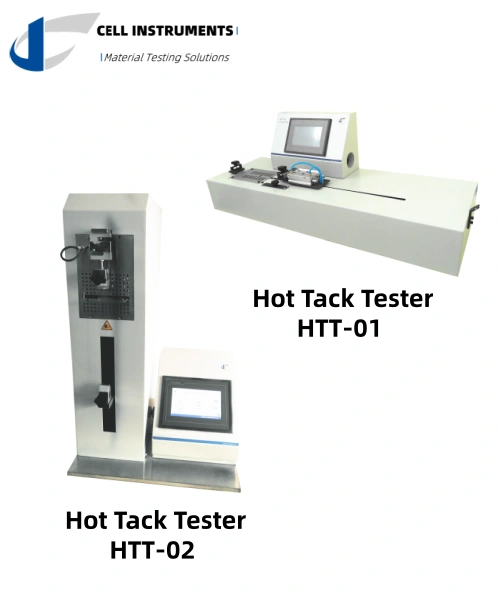
Para medir com precisão força de aderência quente, são utilizados equipamentos de ensaio especializados. O Instrumentos celulares Testador de Hot Tack é uma excelente opção para realizar estes testes. Foi concebido para cumprir as especificações de Norma ASTM F1921 e fornece resultados consistentes e fiáveis. O Testador de Hot Tack mede a força necessária para separar materiais de embalagem selados a quente, ajudando os fabricantes a avaliar a resistência à selagem a quente em condições reais.
Com configurações ajustáveis de temperatura, pressão e tempo de selagem, este testador pode ser utilizado numa vasta gama de materiais e condições de selagem. O Testador de aderência da Cell Instruments é uma ferramenta inestimável para o controlo de qualidade e para a investigação e desenvolvimento, garantindo que os materiais de embalagem cumprem os requisitos exigidos força de aderência quente para um desempenho ideal.
Como o teste de aderência a quente melhora a qualidade das embalagens
Ao realizar o Teste de Hot Tack, os fabricantes podem garantir que os seus materiais de embalagem proporcionem uma proteção adequada resistência à selagem a quente durante a produção. Os testes ajudam a identificar eventuais pontos fracos nas vedações que possam conduzir a falhas em condições reais de utilização. Com dados de teste precisos, os fabricantes podem tomar decisões informadas sobre a seleção de materiais, ajustes de conceção e processos de produção, de modo a otimizar a qualidade das embalagens.
A utilização regular do Teste de Hot Tack ajuda a melhorar a eficiência global das linhas de embalagem, reduzindo o risco de falhas na vedação e aumentando a durabilidade de embalagens de plástico, e garantir que os produtos se mantêm intactos ao longo de todo o seu ciclo de vida.
Conclusão
O Teste de Hot Tack, conforme especificado em Norma ASTM F1921, é um procedimento essencial para avaliar resistência à selagem a quente em embalagens de plástico materiais. Este teste ajuda os fabricantes a garantir que as suas embalagens conseguem resistir às tensões mecânicas que ocorrem durante o processo de selagem. Com o força de aderência quente, os materiais de embalagem podem manter a sua integridade, garantindo a proteção dos produtos no seu interior.
Ao incorporar o Teste de Hot Tack Ao integrar estes elementos nos seus processos de controlo de qualidade, os fabricantes podem melhorar a fiabilidade e a durabilidade das suas embalagens, reduzindo, em última análise, o desperdício e aumentando a satisfação dos clientes. O Testador de aderência da Cell Instruments oferece uma solução precisa e fiável para a realização destes ensaios, garantindo que os materiais de embalagem cumprem os mais elevados padrões de qualidade e desempenho.
 Português
  English
  العربية
  Български
  Čeština
  Dansk
Dansk  Deutsch
  Ελληνικά
  Español
  Eesti
Eesti  Suomi
Suomi  Français
  Magyar
  Bahasa Indonesia
  Italiano
  日本語
日本語  한국어
한국어  Lietuvių kalba
  Latviešu valoda
  Norsk bokmål
  Nederlands
  Polski
  Română
  Русский
  Slovenčina
  Slovenščina
  Svenska
  Türkçe
  Українська
  Tiếng Việt
  ไทย
ไทย  עִבְרִית
  हिन्दी
  繁體中文
繁體中文