
Introdução
Sacos de vácuo desempenham um papel crucial na embalagem de alimentos, dispositivos médicos e aplicações industriais, proporcionando uma vedação hermética que preserva a qualidade do produto e prolonga o prazo de validade. A integridade destes sacos depende em grande medida das suas propriedades de selagem a quente. A condução de um Teste de Hot Tack permite que os fabricantes e as equipas de controlo de qualidade avaliem a resistência da selagem imediatamente após a selagem, enquanto o material ainda está quente. Este teste garante que a embalagem pode suportar o stress mecânico durante o manuseamento, enchimento e transporte automatizados, o que é fundamental para evitar fugas ou contaminação do produto. A metodologia de teste está em conformidade com Norma ASTM F1921, fornecendo resultados padronizados que orientam a seleção de materiais e a otimização de processos.
Compreender o teste de aderência a quente
O Teste de Hot Tack mede a capacidade de um selo térmico resistir às forças de descasque imediatamente após a selagem. Na prática, duas tiras da película do saco de vácuo são seladas em condições definidas de temperatura, tempo de contacto e pressão. Algumas máquinas de ensaio permitem a utilização de uma única tira que é cortada durante a selagem para formar duas amostras. A amostra selada é então separada a uma velocidade controlada, sendo registada a força necessária para quebrar o selo. A Teste de Hot Tack capta o desempenho do vedante durante o momento crítico em que o material ainda não arrefeceu, simulando condições de embalagem reais.
Procedimentos de ensaio de selagem a quente
O procedimento de teste pode seguir Método A ou Método B dependendo do tipo de aparelho de teste de aderência a quente:
- Método A (atraso fixo): A máquina plota a força de aderência a quente em função do tempo após a abertura da mandíbula. Após um atraso definido pelo fabricante, a força necessária para descolar o vedante é medida em vários momentos para determinar a resistência do vedante à medida que o material arrefece.
- Método B (atraso variável): A máquina traça a força máxima de aderência a quente em função do tempo após um atraso selecionado pelo utilizador. A força máxima de descolagem durante o percurso da pega é registada e comunicada como força de aderência a quente para o atraso selecionado.
Ambos os métodos fornecem dados essenciais para avaliar a resistência imediata das vedações a quente em condições de produção, ajudando a identificar parâmetros de vedação e escolhas de materiais óptimos.
Importância da ASTM F1921
Norma ASTM F1921 fornece a metodologia padronizada para a realização de testes de Hot Tack, garantindo consistência e fiabilidade em todos os laboratórios e instalações de produção. A força de selagem a quente é crítica em operações de selagem de formas e enchimento porque as áreas embaladas podem ser sujeitas a stress antes de a selagem ter arrefecido completamente. Uma resistência insuficiente à aderência a quente pode levar à falha prematura do selo, comprometendo a segurança do produto e causando desperdício de material. Esta norma é amplamente reconhecida na indústria da embalagem e constitui a base para comparar materiais e validar processos de produção.
Aplicações práticas para sacos de vácuo
O ensaio de aderência a quente é especialmente importante para:
- Embalagem de alimentos: Evita fugas durante a selagem a alta velocidade e assegura a integridade do prazo de validade.
- Embalagem médica: Mantém a esterilidade, evitando a quebra do selo em bolsas seladas a quente.
- Embalagens industriais: Garante que os sacos de vácuo resistentes se mantêm sob tensão mecânica durante a armazenagem e o transporte.
Instrumento recomendado para o ensaio de aderência a quente
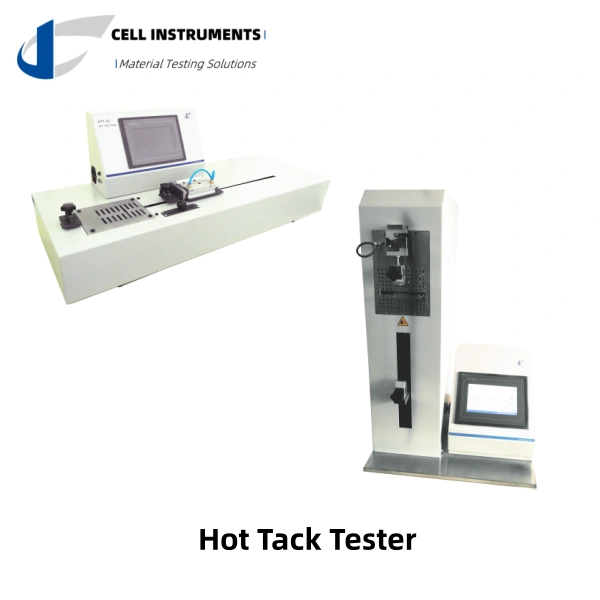
Para um teste preciso e fiável de vedações de sacos de vácuo, o Testador de aderência HTT-01 da Cell Instruments é altamente recomendado. O HTT-01 efectua métodos de atraso fixo e variável, fornecendo medições precisas da força de selagem a quente. Suporta testes de descasque automatizados, simula condições de manuseamento reais e regista dados detalhados para análise de controlo de qualidade. A utilização do HTT-01 permite aos fabricantes otimizar a temperatura de selagem, a pressão e o tempo de permanência, assegurando um desempenho consistente e reduzindo os defeitos de produção.
Conclusão
Em resumo, o Teste de Hot Tack é uma ferramenta vital para avaliar a resistência imediata dos selos térmicos em sacos de vácuo. Ao simular as forças de descasque experimentadas durante a produção, os fabricantes podem garantir a segurança do produto, otimizar os processos de embalagem e manter os padrões de qualidade. A seguir Norma ASTM F1921, combinada com instrumentos fiáveis, como o Instrumentos celulares HTT-01, permite resultados precisos e reproduzíveis que ajudam as empresas a fornecer soluções de embalagem fiáveis e de alta qualidade.
 Português
  English
  العربية
  Български
  Čeština
  Dansk
Dansk  Deutsch
  Ελληνικά
  Español
  Eesti
Eesti  Suomi
Suomi  Français
  Magyar
  Bahasa Indonesia
  Italiano
  日本語
日本語  한국어
한국어  Lietuvių kalba
  Latviešu valoda
  Norsk bokmål
  Nederlands
  Polski
  Română
  Русский
  Slovenčina
  Slovenščina
  Svenska
  Türkçe
  Українська
  Tiếng Việt
  ไทย
ไทย  עִבְרִית
  हिन्दी
  繁體中文
繁體中文