
Hot Tack Test and Hot Seal Strength: Understanding ASTM F1921
What is the Hot Tack Test?
ה מבחן Hot Tack measures the strength of seals formed on plastic packaging materials while they are still hot. This test is crucial because, during packaging operations, sealed areas often experience mechanical stresses while the materials are still cooling and forming their final bond. If the hot seal strength is inadequate, the packaging can fail during production, leading to operational inefficiencies and compromised product integrity.
The test involves sealing two strips of the material (either the same film or different films) under controlled conditions of pressure, temperature, and contact time. The sealed strips are then pulled apart, and the force required to peel them apart is measured. This force provides valuable insight into the חוזק הדבק חם of the material.
ASTM F1921: The Standard for Hot Tack Testing
ASTM F1921 specifies the procedure for the מבחן Hot Tack, providing guidelines for sealing conditions and the measurement of hot seal strength. The standard defines two different methods for testing, each with distinct approaches:
- Method A (Fixed Delay Type): In this method, the machine measures the חוזק הדבק חם at various intervals after the sealing jaws open. The delay and withdrawal periods are part of the material’s cooling curve. The force is measured at multiple times to determine how the seal strength evolves as the material cools.
- Method B (Variable Delay Type): This method allows users to select a delay time before measuring the maximum hot tack strength. The force required to pull the seal apart is measured after the delay, providing a profile of the material’s resistance to stress as it cools.
Both methods are essential for assessing the חוזק הדבק חם of packaging materials, helping manufacturers choose the right materials for specific applications, such as plastic packaging in form-fill-seal operations.
Significance and Use of the Hot Tack Test
The Role of Hot Tack in Packaging Operations
ב form-fill-seal operations, packaging is sealed while still hot, and the sealed areas are often exposed to mechanical stress during the process. The מבחן Hot Tack ensures that the seals can withstand these stresses before they cool down completely. If the seals are too weak, they may fail, causing breakage, leakage, or contamination.
ה חוזק הדבק חם of a material is directly related to its performance in high-speed packaging lines, especially in industries like food packaging, pharmaceuticals, and consumer goods, where efficiency and safety are critical. The מבחן Hot Tack helps manufacturers determine if their packaging material can perform well in these environments.
Why Hot Seal Strength Matters
Hot seal strength is a vital property for packaging materials that are subjected to extreme conditions, such as heat, humidity, and physical stress. Plastic packaging often experiences these conditions during sealing, storage, and transportation. Ensuring strong, reliable seals can prevent product spoilage, contamination, or damage due to seal failure.
For example, in food packaging, an inadequate seal can result in the product becoming contaminated by external elements or deteriorating prematurely due to moisture or air leakage. In pharmaceutical packaging, weak seals could compromise the integrity and safety of the medication inside.
By performing Hot Tack Tests and evaluating hot seal strength, manufacturers can guarantee the quality and reliability of their packaging materials.
Testing Equipment for Hot Tack Strength
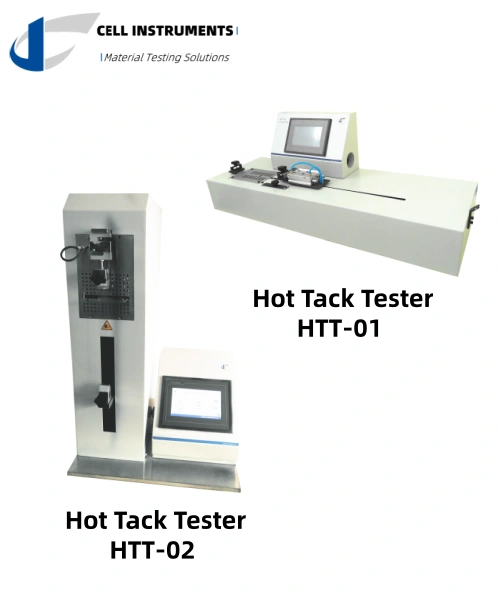
To accurately measure חוזק הדבק חם, specialized testing equipment is used. The Cell Instruments בודק חם טאק is a great option for conducting these tests. It is designed to meet the specifications of ASTM F1921 and provides consistent, reliable results. The בודק חם טאק measures the force required to peel apart hot-sealed packaging materials, helping manufacturers assess the hot seal strength under real-world conditions.
With adjustable settings for temperature, pressure, and sealing time, this tester can be used for a wide range of materials and sealing conditions. The Cell Instruments Hot Tack Tester is an invaluable tool for quality control and research and development, ensuring that packaging materials meet the required חוזק הדבק חם for optimal performance.
How the Hot Tack Test Improves Packaging Quality
By conducting the מבחן Hot Tack, manufacturers can ensure that their packaging materials provide adequate hot seal strength during production. Testing helps identify any weaknesses in the seals that may lead to failure under real-world conditions. With accurate testing data, manufacturers can make informed decisions about material selection, design adjustments, and production processes to optimize packaging quality.
Regular use of the מבחן Hot Tack helps improve the overall efficiency of packaging lines by reducing the risk of seal failures, enhancing the durability of plastic packaging, and ensuring that the products remain intact throughout their lifecycle.
Conclusion
ה מבחן Hot Tack, as specified in ASTM F1921, is an essential procedure for evaluating hot seal strength in plastic packaging materials. This test helps manufacturers ensure that their packaging can withstand the mechanical stresses that occur during the sealing process. With the right חוזק הדבק חם, packaging materials can maintain their integrity, ensuring the protection of the products inside.
By incorporating the מבחן Hot Tack into their quality control processes, manufacturers can improve the reliability and durability of their packaging, ultimately reducing waste and improving customer satisfaction. The Cell Instruments Hot Tack Tester offers an accurate and reliable solution for performing these tests, ensuring that packaging materials meet the highest standards of quality and performance.
 עִבְרִית
  English
  Français
  Español
  Русский
  العربية
  日本語
日本語  한국어
한국어  Tiếng Việt
  ไทย
ไทย  Português
  हिन्दी
  繁體中文
繁體中文